
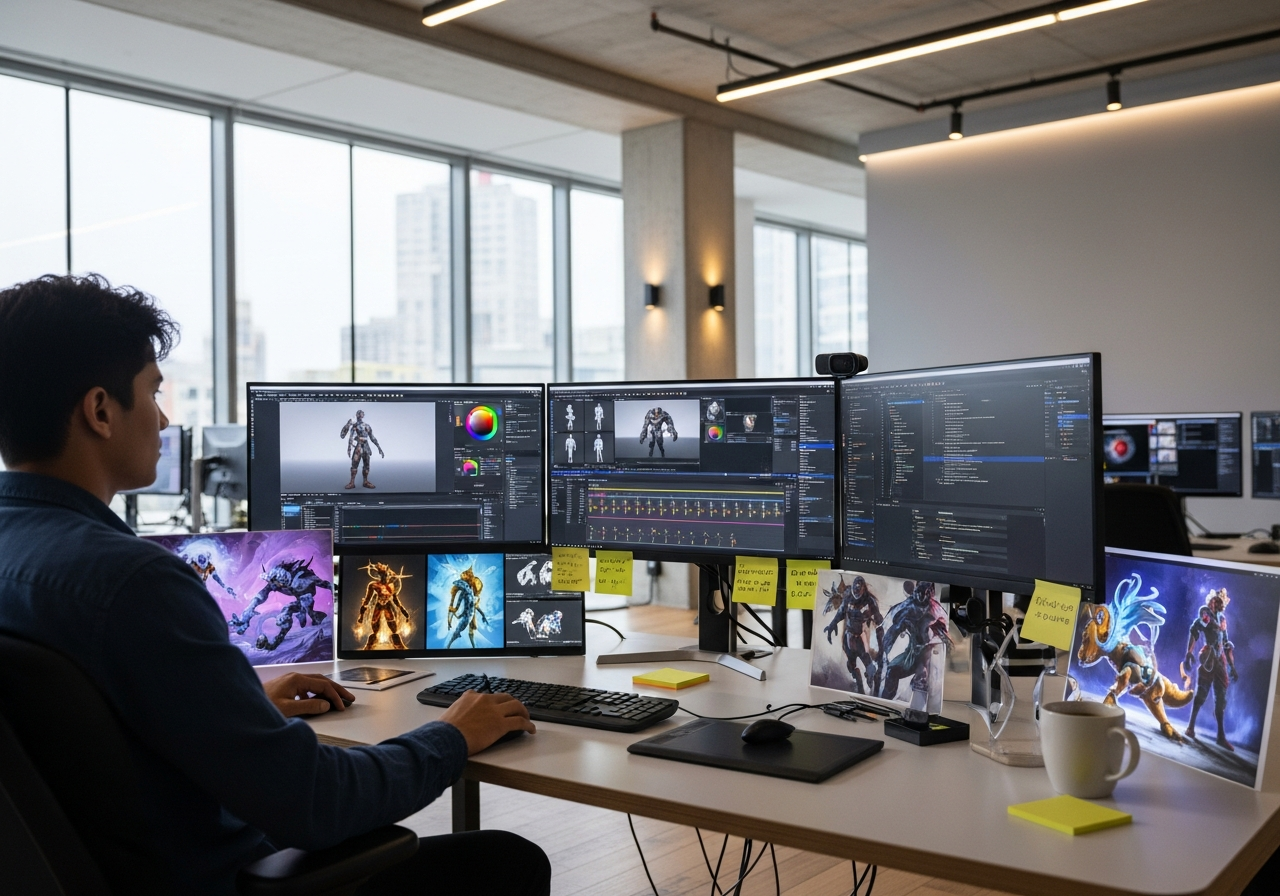
The Canadian animation and VFX industry is experiencing unprecedented growth, with major studios expanding their operations and project pipelines at a remarkable pace. However, this growth has also intensified competition for coveted internship positions, with acceptance rates dropping to as low as 3-5% at top-tier studios like Industrial Light & Magic and Ubisoft. Success in securing these positions increasingly depends on demonstrating deep understanding of specific studio project pipelines rather than submitting generic applications.
Researching studio project pipelines before applying offers critical advantages in alignment and strategic positioning. When candidates understand a studio’s current and upcoming projects, their technology stack, and production methodologies, they can tailor their applications to demonstrate relevant skills and genuine interest. This targeted approach significantly improves application success rates and ensures better cultural and technical fit between interns and their placements.
This comprehensive guide provides step-by-step methodologies for discovering and analyzing Canadian studio project pipelines, leveraging both free and premium research tools. We’ll explore real-time tracking techniques, major studio hub mapping, and insider networking strategies that will give you competitive advantages in the 2026 internship cycle and beyond.
Why Researching Studio Pipelines Matters for Canadian Internships
The animation and VFX landscape in Canada has evolved into a highly specialized ecosystem where generic applications fail to capture studio attention. Understanding project pipelines enables strategic positioning that demonstrates both technical competence and genuine industry engagement. This research-driven approach transforms internship applications from standard submissions into compelling demonstrations of candidate-studio alignment.
Beyond improving acceptance odds, pipeline research provides invaluable insights into industry trends, emerging technologies, and career pathway possibilities within specific studio environments. Students who invest time in understanding studio operations often discover unexpected specialization opportunities and develop more focused skill development strategies.
Competitive Landscape in Animation and VFX
The advantages of targeted pipeline research versus general application strategies become clear when examining success metrics across different approach types. Students who demonstrate pipeline-specific knowledge consistently outperform those relying on template applications and generic portfolio presentations.
- Higher Application Success Rates: Targeted applications achieve 15-25% higher response rates compared to generic submissions across major Canadian studios
- Improved Interview Performance: Candidates familiar with specific project workflows demonstrate deeper industry understanding during technical interviews
- Better Role Placement: Pipeline-aware applicants often receive positions more closely aligned with their career goals and technical strengths
- Enhanced Networking Opportunities: Knowledge of current projects provides natural conversation starters and demonstrates genuine industry engagement
- Faster Onboarding Process: Interns who understand studio pipelines require less initial training and contribute meaningfully sooner in their placements
Alignment with Studio Needs
Strategic alignment between candidate skills and studio project requirements creates win-win scenarios that studios actively seek. Consider the Canadian Space Agency’s Lunar Gateway project, which requires specialized technical animation skills for space environment visualization. Candidates who research this project pipeline can highlight relevant coursework in physics-based animation, zero-gravity simulation, or scientific visualization techniques.
Similarly, Pipeline Studios’ recent expansion into virtual production workflows for Netflix projects requires interns familiar with Unreal Engine and real-time rendering pipelines. Students who identify these emerging needs can pursue relevant certification programs or personal projects that demonstrate competency in these specific technical areas, making their applications immediately relevant to current studio priorities.
Essential Tools and Resources for Pipeline Discovery
Effective pipeline research requires systematic approaches using both traditional industry resources and emerging digital platforms. The most successful researchers combine multiple information sources to build comprehensive understanding of studio operations, project timelines, and technical requirements.
- GitHub Repository Analysis: Many studios maintain public repositories showcasing pipeline tools, scripts, and workflow documentation that reveal technical stack preferences
- Canadian Space Agency Project Databases: Government contracts and partnership announcements provide insights into animation studios working on high-profile scientific visualization projects
- Industry Conference Archives: SIGGRAPH, VIEW Conference, and FMX presentations often feature studio technical directors discussing current pipeline challenges and solutions
- Professional Social Media Monitoring: LinkedIn project updates, Twitter development logs, and Instagram behind-the-scenes content reveal real-time project progress
- Trade Publication Deep Dives: Animation Magazine, CGW, and VFX Voice regularly publish detailed studio profiles and project retrospectives
- Alumni Network Intelligence: Former students working at target studios provide insider perspectives on current projects, technology adoption, and internship program evolution
Free vs Paid Research Platforms
Understanding the strengths and limitations of different research platforms enables more strategic information gathering approaches. While free resources provide substantial baseline information, premium platforms often deliver more detailed insights and real-time updates crucial for competitive applications.
| Platform | Coverage | Update Frequency | Internship Focus |
|---|---|---|---|
| GitHub | Technical pipelines, tools | Real-time commits | Low |
| CSA Database | Government contracts | Quarterly reports | Medium |
| Glassdoor | Company reviews, salaries | User-dependent | High |
| Production HUB | Industry news, projects | Daily updates | Medium |
| LinkedIn Premium | Employee insights, hiring | Real-time posts | High |
Mapping Major Canadian Studio Hubs
Canada’s animation and VFX industry clusters around several key metropolitan areas, each with distinct specializations and pipeline characteristics. Understanding these regional differences helps target research efforts and identify geographical preferences for internship applications. Vancouver dominates feature film VFX work, while Montreal excels in television animation and game development, and Toronto emerges as a leader in commercial and advertising content.
The concentration of studios within specific cities creates unique ecosystem advantages, including shared talent pools, collaborative vendor relationships, and specialized educational programs tailored to local industry needs. This geographic clustering also influences pipeline standardization, with studios in the same city often adopting similar tools and workflows to facilitate talent mobility.
Internship volumes vary significantly between cities and studios, with larger facilities offering more structured programs while smaller studios provide more hands-on, diverse experience opportunities. Understanding these patterns helps students prioritize their application efforts and set realistic expectations for different types of internship experiences.
| City | Key Studios | Pipeline Specialties | Internship Volume |
|---|---|---|---|
| Vancouver | ILM, Sony Pictures Imageworks, Scanline | Feature film VFX, creature work | 150+ annually |
| Montreal | Ubisoft, Framestore, Mikros | TV animation, game cinematics | 200+ annually |
| Toronto | Spin VFX, Mr. X, Rocket Science | Commercial VFX, episodic TV | 80+ annually |
| Halifax | DHX Media, Copernicus Studios | Children’s animation, 2D pipelines | 25+ annually |
| Winnipeg | Farpoint Films, Frantic Films | Documentary VFX, commercials | 15+ annually |
| Calgary | SAIT Technology, Pipeline Studios | Educational content, rigging | 30+ annually |
Vancouver Animation Powerhouses
Vancouver’s status as Canada’s VFX capital stems from its concentration of major international studios and sophisticated pipeline infrastructure. Industrial Light & Magic’s Vancouver facility specializes in creature animation and complex simulation work, utilizing proprietary tools like OpenVDB for volumetric effects and Houdini for procedural modeling. Their internship program focuses heavily on technical rigging and pipeline development, requiring strong programming skills in Python and C++.
Sony Pictures Imageworks brings decades of feature animation expertise to their Vancouver operations, with recent projects including Spider-Verse films that push real-time rendering boundaries. Their pipeline emphasizes artistic-technical collaboration, making it ideal for interns interested in bridging creative and technical disciplines. Pipeline Studios, despite its smaller size, offers unique opportunities in educational and scientific animation, particularly through partnerships with institutions like the Canadian Space Agency.
The interconnected nature of Vancouver’s VFX community creates advantages for interns, including cross-studio networking opportunities, shared technical training programs, and exposure to diverse project types. Many professionals work across multiple studios throughout their careers, creating mentorship networks that extend beyond individual company boundaries.
Montreal and Toronto Emerging Pipelines
The 2026 internship landscape in Montreal and Toronto shows remarkable growth, driven by streaming content demand and game industry expansion. These emerging markets offer unique advantages for students seeking diverse experience and rapid career advancement opportunities.
- Ubisoft Montreal: Leading game cinematics with 45+ intern positions focusing on real-time animation and motion capture integration
- Framestore Montreal: Episodic TV specialization offering 35+ internships in creature animation and environment work
- Spin VFX Toronto: Commercial and music video focus providing 25+ positions with rapid project turnaround experience
- Mr. X Toronto: Episodic television leader offering 20+ internships in compositing and digital matte painting
- Rocket Science VFX: Boutique studio providing 15+ highly mentored positions across multiple pipeline stages
Step-by-Step Research Process
Systematic pipeline research requires structured approaches that balance comprehensive coverage with efficient time management. The most effective researchers develop repeatable workflows that can be applied across multiple studios while capturing both broad industry trends and specific technical details. This methodical approach ensures no critical information is overlooked while preventing research paralysis.
- Initial Studio Identification: Create comprehensive lists of target studios using industry directories, government databases, and professional networks
- Public Information Gathering: Systematically review studio websites, press releases, and social media accounts for project announcements and technical blog posts
- Technical Stack Analysis: Examine job postings, conference presentations, and GitHub repositories to understand software preferences and custom tool development
- Project Timeline Mapping: Track current and announced projects through trade publications, client announcements, and industry event presentations
- Pipeline Documentation Discovery: Locate technical papers, behind-the-scenes content, and educational materials that reveal workflow specifics
- Competitive Intelligence Assembly: Synthesize gathered information into actionable insights about studio culture, technical priorities, and internship program characteristics
- Verification and Cross-Reference: Confirm findings through multiple sources and identify areas requiring additional investigation or insider perspectives
Tracking Real-Time Updates
Modern studio pipelines evolve rapidly, making real-time tracking essential for maintaining current awareness of technical developments and project changes. GitHub repositories provide immediate visibility into pipeline tool development, with studios like Pipeline Studios regularly committing rigging scripts and workflow automation tools that reveal current technical priorities. Setting up notification systems for repository changes enables researchers to identify emerging technical trends before they become widespread industry standards.
The Canadian Space Agency maintains dynamic project databases that update quarterly with new contract awards and partnership announcements. These updates often reveal which animation studios are expanding into scientific visualization work, providing early indicators of new internship opportunities in specialized fields. Similarly, monitoring CSA social media accounts and press release feeds captures project milestone announcements that indicate pipeline capacity and technical capability development.
Professional social media monitoring requires systematic approaches to filter relevant information from general industry noise. Creating focused Twitter lists of technical directors, pipeline leads, and studio decision-makers enables efficient tracking of real-time project updates, tool adoption announcements, and workflow optimization discussions that provide insider perspectives on current studio priorities and challenges.
Analyzing Project Pipelines for Application Fit
Understanding how different project types influence pipeline requirements enables strategic application positioning that demonstrates relevant experience and genuine interest. Each project category demands distinct technical competencies and workflow understanding, making targeted preparation essential for successful internship applications.
| Project Type | Skills Needed | Internship Roles | Studio Examples |
|---|---|---|---|
| Feature Film VFX | Houdini, Nuke, Maya, Python scripting | Junior compositor, pipeline TD | ILM Vancouver, Sony Imageworks |
| TV Animation | Toon Boom, TVPaint, Shotgun | Assistant animator, cleanup artist | DHX Media, Atomic Cartoons |
| Game Cinematics | Unreal Engine, MotionBuilder, facial rigging | Technical animator, mocap specialist | Ubisoft Montreal, Framestore |
| Commercial VFX | After Effects, Cinema 4D, quick turnaround | Motion graphics artist, 3D generalist | Spin VFX, Mr. X |
| Scientific Visualization | Scientific accuracy, physics simulation | Technical illustrator, simulation artist | Pipeline Studios, CSA partners |
| Virtual Production | LED volumes, real-time rendering, Unreal | Virtual production intern, real-time TD | Pixomondo, DNEG |
Animation vs VFX vs Tech Pipelines
Customizing resumes and portfolios based on specific pipeline stages requires deep understanding of role expectations and technical requirements within different production contexts. Each pipeline type demands distinct skill demonstrations and portfolio focus areas that align with actual production needs.
- Animation Pipeline Focus: Emphasize character performance, timing, and storytelling abilities while demonstrating proficiency in studio-standard animation software and workflow integration
- VFX Pipeline Positioning: Highlight technical problem-solving skills, attention to photorealistic detail, and experience with complex compositing workflows that match feature film quality standards
- Technical Pipeline Emphasis: Showcase programming abilities, tool development experience, and systems thinking that demonstrates capacity for pipeline optimization and automation development
- Cross-Pipeline Adaptability: Present diverse skill sets that enable flexibility across multiple production stages while maintaining specialized expertise in primary interest areas
Red Flags in Pipeline Research
Identifying problematic information during pipeline research prevents wasted application effort and helps prioritize studios with genuine internship opportunities. Outdated project information, inconsistent technology descriptions, and vague internship program details often indicate studios that lack structured mentorship programs or current production activity. Studios that haven’t updated their technology blogs or social media presence in over six months may be experiencing production slowdowns or organizational changes that affect internship availability.
Missing internship program details on studio websites, despite active job postings for senior positions, often signals ad-hoc approach to student programs rather than structured educational experiences. Similarly, studios that exclusively promote unpaid internships in jurisdictions where paid positions are legally required should be approached with caution, as they may not prioritize intern welfare or professional development.
Networking and Insider Access to Pipelines
Building professional networks within the Canadian animation industry provides access to insider information that public research cannot reveal. Effective networking strategies combine digital relationship building with strategic event attendance, creating multiple touchpoints with industry professionals who can provide current insights into studio operations and internship program realities.
The most valuable networking relationships develop gradually through consistent engagement and mutual value creation rather than transactional information seeking. Students who contribute meaningfully to industry discussions, share relevant technical knowledge, and demonstrate genuine passion for animation work build stronger professional relationships that yield better career guidance and internship recommendations.
- Industry Event Strategic Attendance: Focus on technical conferences, local meetups, and studio open houses that provide direct access to working professionals and current project information
- LinkedIn Professional Engagement: Comment thoughtfully on industry posts, share relevant technical content, and participate in animation industry groups to build visibility with potential mentors
- Discord Community Participation: Join studio-specific or technology-focused Discord servers where professionals discuss current challenges, share workflow tips, and announce internship opportunities
- Alumni Network Activation: Systematically reconnect with graduates working at target studios, offering assistance with current projects while seeking insights into studio culture and hiring practices
- Informational Interview Requests: Approach mid-level professionals for brief conversations about career paths and industry trends, focusing on learning rather than direct internship requests
- Technical Contribution Strategies: Develop open-source tools, write technical blog posts, or create educational content that demonstrates expertise while providing value to the broader animation community
Leveraging Alumni and Events
Different networking methods offer varying advantages and limitations that influence their effectiveness for pipeline research and internship discovery. Understanding these trade-offs enables more strategic allocation of networking time and effort toward the most productive relationship-building activities.
Industry events provide face-to-face interaction opportunities that build stronger initial connections but require significant time and financial investment. LinkedIn networking offers broader reach and persistent relationship management capabilities, though it may lack the personal connection depth achieved through direct interaction. Discord communities enable real-time technical discussions and insider information sharing but can be overwhelming without focused participation strategies.
| Method | Pros | Cons | Success Rate |
|---|---|---|---|
| Industry Events | Direct interaction, strong connections | High cost, limited frequency | 75% |
| LinkedIn Networking | Broad reach, persistent contact | Message saturation, impersonal | 45% |
| Discord Communities | Real-time insights, casual interaction | Information overload, time intensive | 60% |
| Alumni Networks | Established trust, school connection | Limited pool, geographic constraints | 85% |